Conservation

Our organization has accepted and committed to prevent the environmental impact of our products, to prevent environmental pollution, to carry out continuous measurement and monitoring for this purpose, to document, implement, maintain our works, and to keep them open to public inspection.
ADAPTATION TO CLIMATE CHANGE
The environmental, social and economic consequences of climate change, which is one of the most important agenda items of the international community, are important. Reducing the effects of climate change, eliminating the risks arising from climate change and taking measures for it, managing risk factors depend on integrating climate change adaptation policies with country policies.
In this context, analysis of climate sensitivity and vulnerabilities, determination of the effects of climate change on ecosystems and biodiversity, sustainable management of water resources, determination of the effects of drought and desertification on natural balance, forestry, agriculture and livestock, health, tourism, energy, industry, infrastructure and construction. The current outlook of the transportation sectors and their integration with climate change adaptation policies in the future constitute the main framework of this commission's work.
In this context, it is aimed to analyze the current situation on the aforementioned issues and to provide input to the Climate Law and the national contribution statement to be updated with the legislation, policy and action proposals produced by identifying the problem areas.
GREENHOUSE GAS REDUCTION
Climate change, which is one of the most important issues on the international agenda today, is a multidimensional problem and its negative effects are beyond the borders of the country. For this reason, it has important ecological, economic and social consequences on a global scale.
Reducing greenhouse gases that cause climate change due to our unsustainable production and consumption habits; The necessity of taking urgent and effective measures has become the most important environmental policy agenda for all countries. In line with the Net Zero Emission target for 2053 announced by our country; Taking the opinions of all our stakeholders, determining our greenhouse gas reduction policies with an inclusive perspective, starting Turkey's green transformation move and realizing our sustainable and environmentally friendly growth targets are among our main goals.
The fight against climate change has many different dimensions such as mitigation, adaptation, finance, technology and cooperation. However, in order to prevent climate change, the most critical topic in limiting global warming to 1.5 °C is "Greenhouse Gas Reduction". Significant transformation activities are required in many sectors to achieve the necessary emission reduction.
In 2021, Özpres A.Ş. Greenhouse Gas Inventory report was prepared.
Özpres determined its greenhouse gas emission inventories in accordance with the scenario of keeping global warming “below 1.5°C” and stated its direct and indirect emissions in the inventory report. Determined direct and indirect emissions were calculated in 2021, which was chosen as the base year, and emission amounts were determined in this report. However, emission amounts cannot be shared with the public, since verification has not yet been made by an accredited company.
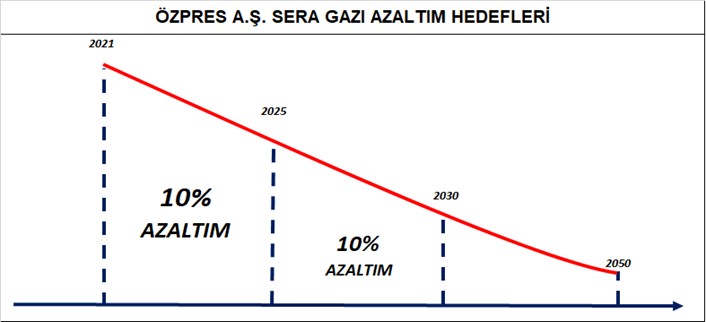
Özpres has set greenhouse gas targets in line with the scenario of keeping global warming “below 1.5°C” and aims to reduce its emissions by 20% by 2030.
MAIN MEASURES TO REDUCE GREENHOUSE GAS EMISSIONS
Reducing Fuel Consumption Limiting individual vehicle use
Alternative Fuel Preference Electricity
Life Cycle Analysis
Fuel Saving Designs
Sustainable Road Construction
Vehicle Technology Development
Traffic Management Systems
Intelligent Transportation Systems
Administrative Sanctions
Reducing Mobility
ÖZPRES A.Ş. OUR SUSTAINABILITY APPROACH
The “Rio Conference on Environment and Development” held in 1992 marked the beginning of a new era in terms of the weight of the concept of sustainable development on the intergovernmental agenda. At the United Nations Millennium Summit held in September 2000, the United Nations Millennium Development Goals (MDGs), which include numerical targets to be fulfilled until 2015, were adopted in order to combat poverty, gender equality, environmental sustainability and ensure access to education. The evaluations revealed that while progress has been made in terms of reducing extreme poverty and hunger, ensuring that everyone receives basic education, and reducing child mortality, sufficient progress has not been made in terms of ensuring gender equality, combating climate change and environmental degradation, and that the poorest and most vulnerable segments of societies are left out of progress. put it.
While the Millennium Development Goals became a springboard for the new sustainable development agenda, they were replaced by the Sustainable Development Goals (SDGs) as of 2016.
The Sustainable Development Goals, adopted by all UN member countries in September 2015, have three main objectives:
end extreme poverty,
Fighting inequality and injustice,
Climate change prevention and adaptation.
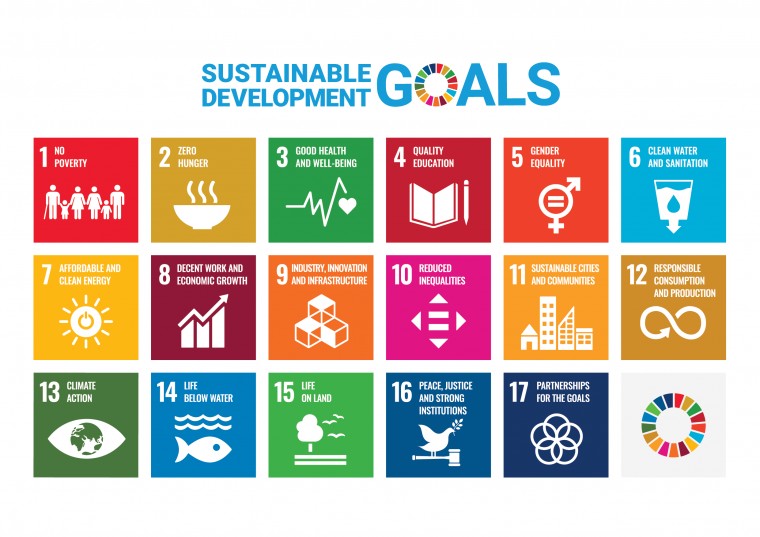
The Sustainable Development Goals have a universal character, focus on the means of implementation, focus on the root causes of poverty, with an inclusion-based approach and broader scope. The Sustainable Development Goals are also called as “Global Goals” for short. These “17 Global Goals” are as follows: